


News and Stories
media Media coverage News Webcast Recipes reflecting cultural and historical heritage Our honorary members- Certified judges of the World Halal Committee
- Administrative team
- Honorary Members
- World Halal Committees
Halal Manufacturing
Verification of manufacturers and industrial enterprises is carried out by the World Halal Committee as part of a strategic initiative to establish a unified, internationally recognized halal production standard.
Amid globalization and expanding markets, manufacturing companies face the need to comply not only with local requirements but also with international standards. Verification is becoming a tool that confirms the transparency, safety, and compliance of products with halal principles at every stage of the life cycle.
The procedure includes a comprehensive audit of production facilities, evaluation of technological processes, inspection of raw materials and ingredients used, as well as control over packaging, storage, and transportation. Additionally, an analysis of the quality management system and compliance with international practices is conducted.
Companies that pass verification gain recognition within the global platform of Islamic countries, which significantly strengthens their competitive position. This opens new export opportunities, increases investment appeal, and builds a lasting image as a trusted manufacturer in the halal industry.
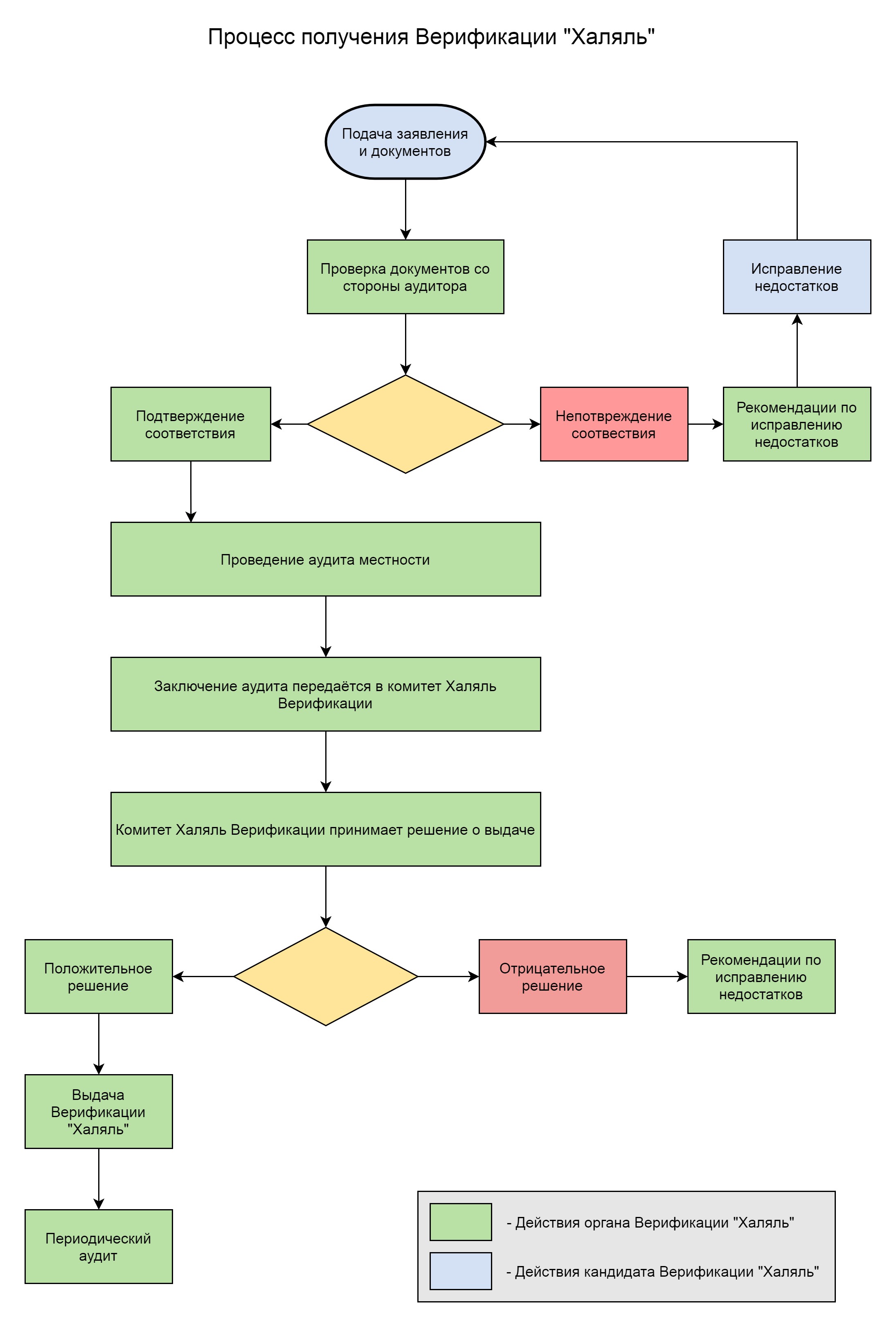
The Process for Obtaining "Halal" Verification for Restaurants
Obtaining "Halal" Verification for a restaurant is a structured, multi-stage procedure that confirms an establishment's compliance with halal standards regarding the products used, food preparation processes, and service conditions. The process begins with the restaurateur submitting an official application and the necessary package of documents to the verification body, after which an auditor conducts a thorough review. If discrepancies are identified, the applicant is sent recommendations for correcting the deficiencies, with the option to resubmit the documents once corrections are made. Once documentation compliance is confirmed, specialists from the verification body conduct an on-site audit directly at the restaurant, evaluating the kitchen, food storage, technological processes, and staff qualifications. Based on the review, an official report is prepared and submitted to the Halal Verification Committee for consideration. The Committee makes the final decision on issuing verification based on the materials submitted. In the case of a negative decision, the restaurant receives justified recommendations for correcting the identified violations and may go through the procedure again. If the decision is positive, the restaurant is issued "Halal" Verification, confirming the establishment's compliance with halal requirements and granting the right to use the corresponding label. The verification status remains current through regular periodic audits, which ensure ongoing monitoring of compliance with halal standards.