


News and Stories
media Media coverage News Webcast Recipes reflecting cultural and historical heritage Our honorary members- Certified judges of the World Halal Committee
- Administrative team
- Honorary Members
- World Halal Committees
Halal Restaurant
Verification of enterprises and restaurants is a key area of activity for the World Halal Committee (WHC of WICS), implemented within a unified global platform of Islamic countries and international culinary communities.
This initiative is a comprehensive evaluation and recognition system aimed at confirming the unconditional compliance of hospitality industry enterprises with international halal standards. Amid growing global demand for transparency, quality, and ethics, verification is becoming not only a mark of trust but also a strategic advantage on the international stage.
The verification process covers all aspects of an enterprise's operations: from the origin and certification of raw materials to the technological processes of preparation, storage, logistics, and service. Special attention is paid to compliance with Islamic norms, sanitary and hygiene requirements, as well as the transparency of the supply chain.
Enterprises and restaurants that successfully complete the verification procedure receive official status confirming their compliance with high international halal standards. This status strengthens the brand's reputation, opens access to international partnerships, and builds lasting trust among guests, investors, and the professional community.
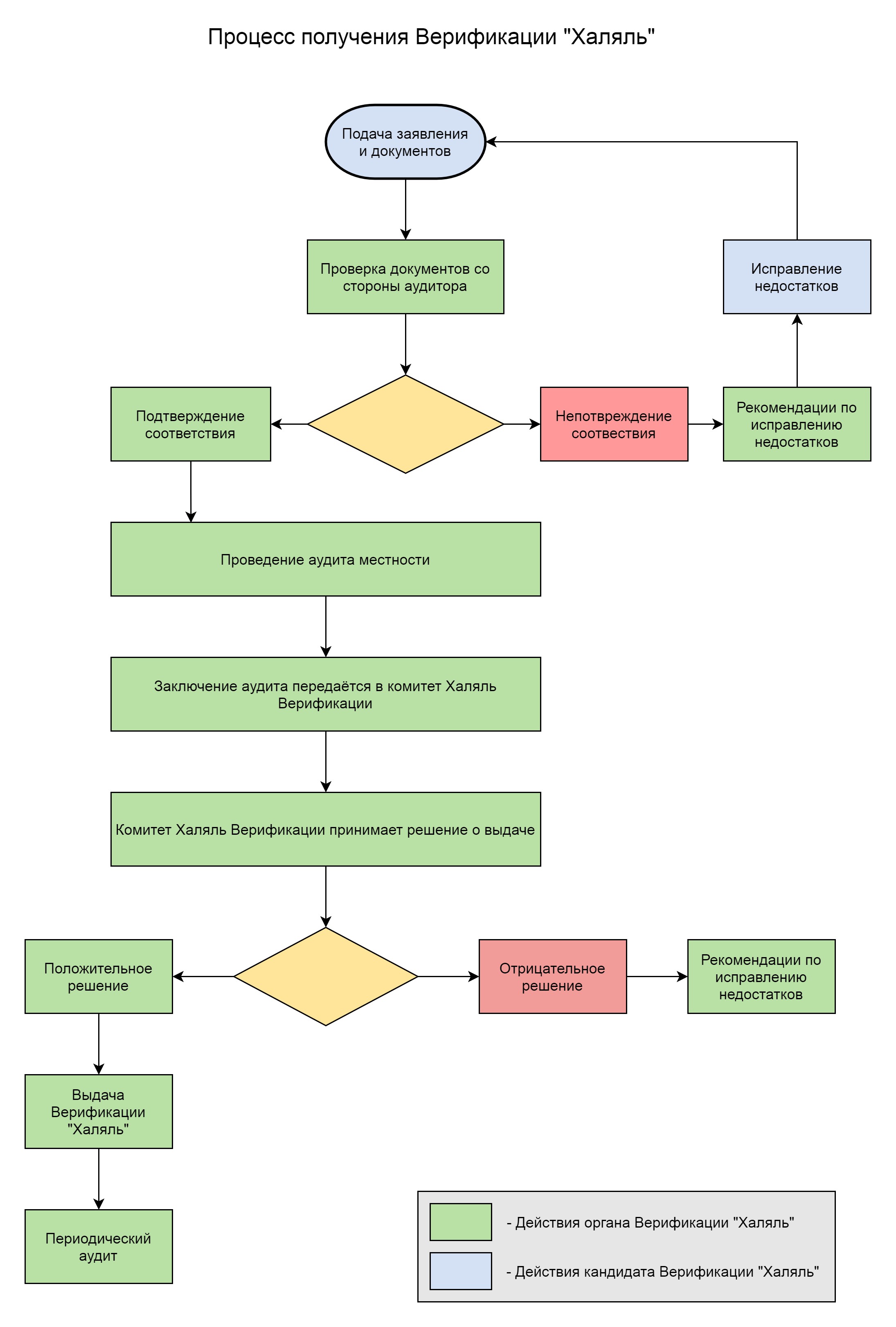
The Process for Obtaining a "Halal" Manufacturer Certificate
Obtaining "Halal" verification is a structured, multi-stage process aimed at confirming that a production facility complies with established halal standards. The process begins with submitting an application and a package of documents to the verification body, after which an auditor conducts a detailed review. Based on the document review, a decision is made regarding compliance or non-compliance: if deficiencies are identified, the applicant is sent recommendations for correcting them, with the option to reapply. Once documentation compliance is confirmed, specialists from the verification body conduct an on-site audit directly at the production facility. The audit findings are submitted to the Halal Verification Committee, which makes the final decision on issuing the certificate. In the case of a negative decision, the manufacturer also receives recommendations for correcting deficiencies and may go through the procedure again. If the decision is positive, the manufacturer is issued a "Halal" Verification confirming that its products and processes comply with halal requirements. The certificate remains valid through periodic audits, which ensure ongoing monitoring of compliance with the standards.