


News and Stories
media Media coverage News Webcast Recipes reflecting cultural and historical heritage Our honorary members- Certified judges of the World Halal Committee
- Administrative team
- Honorary Members
- World Halal Committees
The World Platform of Islamic Countries Culinary Societies — WICS — is a high-level international institutional platform bringing together countries, professional culinary associations, the hospitality industry, and the manufacturing sector into a single global system of standards, trust, and recognition.

Founded on May 13, 2017, in Istanbul, Turkey, the platform was formed as a strategic alliance of culinary communities of the Islamic world. It was built on the idea of creating a unified space where tradition, culture, and modern quality standards shape a new level of international cooperation.
Today, WICS brings together 25 countries representing the Islamic world and strategic partner regions:
Uzbekistan, Kazakhstan, Kyrgyzstan, Pakistan, Bangladesh, Malaysia, Indonesia, Turkey, Saudi Arabia, Qatar, Kuwait, the Maldives, Bosnia and Herzegovina, Egypt, Morocco, Gambia, Nigeria, Tunisia, Syria, Lebanon, Libya, Jordan, Russia, Algeria, and Palestine.
The platform's geography reflects its true essence — a global union of cultures, markets, and professional communities shaping the future of the halal industry.
In 2019, the World Halal Commission was established within the structure of WICS — a specialized international body responsible for implementing, developing, and overseeing halal standards at the global level.
By unanimous decision of representatives from all 25 member countries, Akbar Umarov, President of the Uzbekistan Chefs Association, was appointed President of the World Halal Commission. Since his appointment and to this day, systematic and large-scale work has been carried out under his leadership to develop international halal verification and strengthen the organization's position on the global stage.
The activities of the World Halal Commission are carried out in strict accordance with the requirements of the OIC and SMIIC, ensuring full compliance with internationally recognized halal standards.
This means that every verification and certification procedure is based on the integration of religious principles set out in the Holy Quran with modern requirements for quality, safety, traceability, and transparency.
The World Halal Commission implements a comprehensive evaluation system covering:
— catering establishments and restaurants
— manufacturing enterprises and factories
— tourism and hospitality facilities
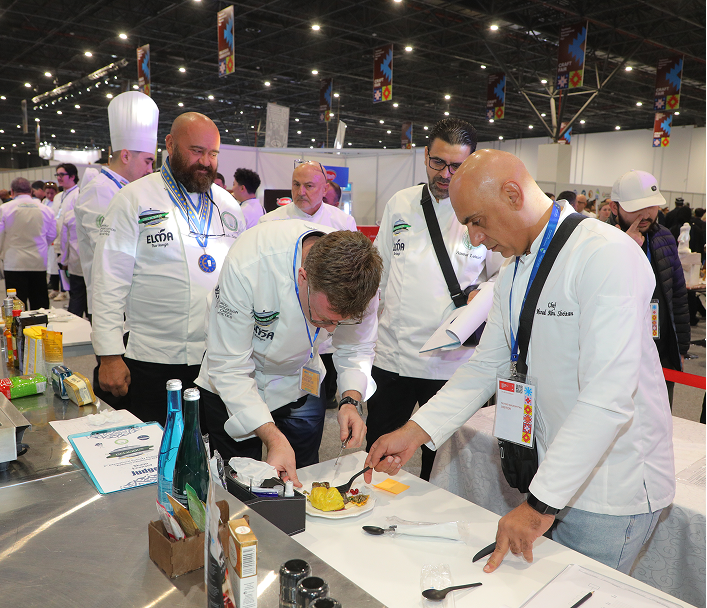
— professional chefs within the international Halal Chef program
Each entity undergoes a multi-level review: from analyzing the origin of raw materials and evaluating suppliers to auditing production processes, sanitary standards, logistics, and compliance with ethical standards.
To date, more than 1,000 enterprises, production facilities, and certified chefs worldwide have successfully completed the verification procedure, confirming the system's high level of trust, resilience, and international recognition.
The World Halal Commission of the World Platform of Islamic Countries Culinary Societies is shaping a new global architecture for the halal industry — a system in which quality, transparency, and trust become a universal language of interaction between countries, businesses, and society.
This is not just an organization.
This is an international standard.
This is the ecosystem of the future.
Manufacturer Certification - Halal VerificationVerification of manufacturers and industrial enterprises is carried out by the World Halal Committee as part of a strategic initiative to establish a unified, internationally recognized halal production standard. |
 |
Everything you wanted to know about halal certification — we've gathered the most frequently asked questions in one place.


A Halal certificate can be obtained by any business entity operating in the food industry and hospitality sector. This includes:
• Restaurants, cafes, teahouses, and fast food outlets.
• Food producers, meat processing plants, and confectionery factories.
• Suppliers of raw materials, spices, and food additives.
• Hotels and hotel complexes developing the Halal tourism (Halal Friendly) direction.
• Halal Chef specialists: professional chefs and pastry chefs. An individual certificate confirms that the specialist has mastered the technology of preparing Halal dishes and confectionery, knows the rules of product compatibility, and is able to work with specialized ingredients.
The main difference lies in strict "farm-to-fork" control. In a certified Halal kitchen, cross-contamination is completely excluded: alcohol use is prohibited (even for flambéing or in sauces), and the origin of gelatin, vinegar, and cheeses is strictly verified. In addition, only meat slaughtered strictly according to Islamic traditions is permitted. Having a certificate guarantees the guest the absolute spiritual and hygienic purity of the dish.
Halal verification is the official process of checking and confirming that food products, ingredients, production processes, and catering services fully comply with the strict standards and canons of Islam. Verification guarantees the absence of prohibited components (haram) at every stage — from raw material procurement and the cleanliness of kitchen equipment to the serving of the finished dish to the guest.
The process of obtaining a certificate consists of several key stages:
1. Application submission: The business submits an official application and provides documentation on the raw materials and ingredients used.
2. Production audit: An expert commission conducts a thorough inspection of the kitchen, warehouses, and production lines.
3. Staff training: Chefs and kitchen staff undergo instruction on complying with Halal standards during their work.
4. Certificate issuance: Upon successfully passing the inspection, the business is issued an official certificate of compliance for a set period, after which the brand gains the right to use the "Halal" label.
Our mission is to build a global system of trust in the halal industry, based on international standards, professional expertise, and deep respect for Islamic values.
We strive for halal to become not only a religious norm, but also a universal symbol of quality recognized throughout the world.
The philosophy of the World Halal Commission is built on fundamental principles:
Global trust — through transparent and internationally recognized verification mechanisms.
Absolute quality — through strict control and compliance with OIC and SMIIC standards.
Unity and cooperation — through uniting Islamic countries into a single system of professional interaction.
Innovation and development — through the integration of modern technologies and international practices.
We are shaping a future in which halal is a mark of the highest level of responsibility, quality, and trust.
World Halal Commission offers unique strategic opportunities for businesses, professionals, and government structures:
Confirmation of compliance with global halal requirements, backed by international recognition.
Expanding export potential and integrating into the global halal economy.
Recognition and promotion of chefs on the international stage.
Support for businesses at every stage of implementing standards and preparing for certification.
Access to an international community of experts, investors, and organizations.
Building the status of a trusted and recognized participant in the global halal industry.
World Halal Commission is creating a new reality in which halal is not merely compliance with requirements, but the highest level of quality recognized on the international stage.
We do not adapt to standards.
We shape them.


Do you have any questions we can help with? Write to us and we’ll get in touch with you right away!